Runge Summer 2027 in Wolgast: New Exhibitions and Art Trails for the 250th Anniversary
In 2027, the German town of Wolgast will celebrate the 250th anniversary of Philipp Otto Runge, one of the leading figures of early German Romanticism. Born here on 23 July 1777, the painter, illustrator and colour theorist will be commemorated through Rungesommer 2027, a cultural programme running from May to October. Visitors can look forward to a redesigned birthplace museum, exhibitions featuring original artworks, walking trails through the historic centre and three festival weekends. The celebrations offer an opportunity to visit this small Baltic coastal town while learning about an artist whose ideas influenced European painting.
Runge Summer 2027: Six Months of Art and Anniversary Celebrations
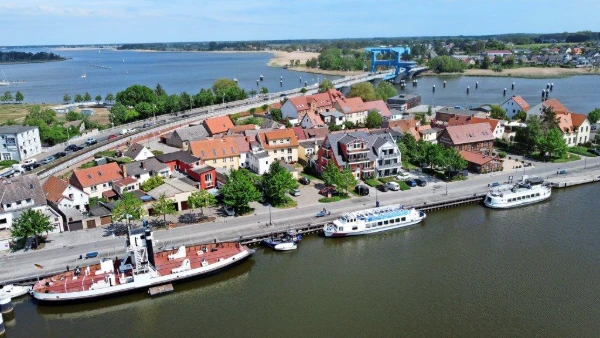
Wolgast lies on the Peenestrom strait in Mecklenburg-Western Pomerania, close to the island of Usedom. Although many travellers pass through the town on their way to Baltic beaches, its historic centre has a cultural history of its own. Philipp Otto Runge grew up in a merchant family connected with maritime trade, and his childhood surroundings influenced his early understanding of nature and everyday life. His father was a shipowner and merchant, while his mother introduced him to paper-cutting. These family connections provide an important starting point for the anniversary programme, which places the artist’s work within the town where his interests first developed.
The celebrations will begin in May 2027 and continue until October, combining museum exhibitions with concerts, theatre, public art and family activities. According to the organisers’ programme published in 2026, four main exhibition formats are planned, including the renewed Rungehaus display, temporary exhibitions, the 37th Mecklenburg-Western Pomerania State Art Exhibition and a three-part exhibition devoted to Runge. Six original artworks are expected on loan, including works from the Hamburger Kunsthalle and the Pomeranian State Museum in Greifswald. The programme is intended for visitors interested in art history as well as families and tourists who may know little about Romantic painting.
Three festival weekends form the centre of the summer celebrations. The first takes place on 26–27 June, followed by the main anniversary weekend on 23–25 July and a third gathering on 21–22 August. The most significant date is Friday, 23 July 2027, exactly 250 years after Runge’s birth. Plans include an official commemorative ceremony, a public festive meal, musical performances and a symphonic ballet inspired by the fairy tale The Fisherman and His Wife. Wolgast Culture Night is scheduled for 24 July, while the August programme will include music, literature and activities for children.
Philipp Otto Runge and His Place in German Romanticism
Philipp Otto Runge lived from 1777 to 1810 and died at just 33, yet his artistic legacy extends well beyond his relatively small collection of completed paintings. He studied in Copenhagen and Dresden, later working in Hamburg, and became closely associated with the emergence of German Romantic art. Unlike painters who concentrated primarily on realistic representation, Runge believed that colour, light and natural forms could communicate human emotions and spiritual ideas. His paintings frequently incorporated flowers, children, symbolic arrangements and changing daylight, creating compositions in which individual details contributed to a broader meaning.
Among his best-known achievements is the cycle Times of Day, an ambitious artistic project exploring morning, day, evening and night through symbolic imagery. Runge also painted portraits, including the celebrated portrait of his parents, and developed an influential approach to understanding colour relationships. His book Farben-Kugel, published in 1810, presented a three-dimensional colour sphere that helped explain how colours could be organised according to their relationships. Visitors to Wolgast in 2027 will encounter these ideas through the new exhibitions, which connect his artistic experiments with the broader history of painting and visual perception.
Runge’s interests also included literature and traditional storytelling. He recorded Low German fairy tales, including The Fisherman and His Wife and The Juniper Tree, which became associated with the Brothers Grimm’s collection. His friendship with fellow Romantic artist Caspar David Friedrich places him within a wider artistic movement that developed around the Baltic region and northern Germany. The anniversary programme uses these different interests to present Runge as more than a painter. Visitors will find connections between visual art, regional language, literature, craftsmanship and the maritime culture of Wolgast.
New Exhibitions in Wolgast for the 250th Anniversary
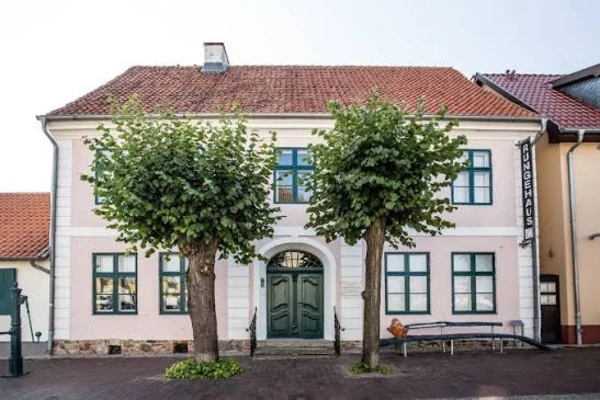
The main exhibition venue will be the Rungehaus at Kronwiekstraße 45, the artist’s birthplace. The historic family residence is undergoing renovation from 1 November 2026 until the end of April 2027, with its reopening scheduled for 2 May 2027. A completely redesigned permanent exhibition will introduce Runge’s life and work through thematically arranged rooms. The building once accommodated 13 members of the Runge family, making it particularly valuable for understanding his upbringing. Rather than presenting his achievements separately from his surroundings, the renewed museum will connect his creative development with the household and town in which he spent his childhood.
Temporary exhibitions will complement the permanent collection. From 8 May to 12 June 2027, the Rungehaus is scheduled to host an exhibition featuring the work of Henning Wagenbreth and Sophia Martineck, with paper-cutting providing a connection to Runge’s own artistic interests. The 37th State Art Exhibition of Mecklenburg-Western Pomerania is also planned for the anniversary season, presenting approximately 50 contemporary artistic positions. These displays will allow visitors to compare historical Romantic ideas with the work of living artists, while offering a wider selection of exhibitions than a traditional single-artist retrospective.
Another major attraction will be the three-part special exhibition The Dream of the Whole – Philipp Otto Runge in Wolgast, scheduled to begin on 26 June 2027 and continue until 31 March 2028. The Museum of Town History at Rathausplatz 6 is among its exhibition venues. The project aims to consider Runge’s artistic ambitions from several perspectives and is expected to include original works on loan. The anniversary will also feature the restoration of a 1906 Wolgast copy of his parents’ portrait. Visitors interested in the artworks themselves should consult the final exhibition information before travelling, as individual loans and display arrangements may be subject to change.
Festival Performances, Contemporary Art and Family Activities
The cultural programme reaches beyond museum galleries. On 23 July 2027, a symphonic ballet based on The Fisherman and His Wife is scheduled for 7.30 pm at the Schiffshalle by Wolgast’s town harbour. An interactive presentation of a Runge comic is planned for 10 pm on Rungeplatz, offering a different way to engage with his life and ideas. St Gertrude’s Chapel will also become an exhibition setting through a spatial art installation in its distinctive circular building. These events connect Runge’s interest in visual storytelling with contemporary performance and the historic architecture of his home town.
Families will find activities throughout the summer rather than exclusively during the birthday weekend. The programme includes children’s entertainment, puppet theatre, dance, concerts and opportunities to participate in creative activities. A regional paper-cutting competition, Cutting Worlds from Paper, opened in September 2026, with entries accepted until 31 January 2027. Other scheduled events include a children’s festival on 20 September and the sixth Artisans’ Day on 9 October, focusing on traditional craftsmanship. These activities reflect the practical artistic skills that played an important part in Runge’s childhood and later creative development.
The celebrations will continue into autumn with a concert associated with the Usedom Music Festival, planned for September at St Peter’s Church. A symposium entitled Romanticism: Religion: Revolution is scheduled for 15–17 October, while a theatrical performance of The Juniper Tree is planned for Halloween at Wolgast Zoo. These later events make September and October worthwhile alternatives for visitors who prefer quieter travel dates. The academic symposium may particularly interest those studying Romantic literature and art, whereas the theatre and music programme provides accessible cultural experiences without requiring specialist knowledge of Runge’s paintings.
A Cultural Walking Route Through Wolgast in 2027
One of the most practical additions to the anniversary programme will be Buntes Band, or Colourful Ribbon, a digital walking experience through Wolgast’s historic centre. Its inauguration is scheduled for 2 May 2027, alongside the reopening of the Rungehaus. Five colour-coded thematic routes will connect locations associated with the town’s heritage and the life of the artist. All routes are planned to begin at the Tourist Information Centre at Kronwiekstraße 3, with free access at any time. The concept allows travellers to explore Wolgast independently, combining outdoor sightseeing with visits to museums and exhibition venues.
A sensible starting point is the Tourist Information Centre, followed by the Rungehaus on Kronwiekstraße. From there, visitors can continue towards Rathausplatz, the historic square containing the Museum of Town History, commonly known as the Kaffeemühle because of its distinctive appearance. The museum offers additional context about Wolgast’s maritime and cultural past. Nearby streets preserve the atmosphere of the old town, while Rungeplatz will become an important gathering place during the anniversary festivities. This suggested route connects several confirmed venues, although it should not be confused with one of the five official colour-coded trails, whose detailed directions must be checked when published.
St Peter’s Church is another worthwhile stop. Its history reflects Wolgast’s former status as a residence of the Pomeranian dukes, who ruled here between 1295 and 1625. The church contains a historic ducal crypt and offers a different perspective on the town’s development. Visitors can then continue towards the town harbour, where the Peenestrom and the area’s shipping heritage remain visible. The riverside setting helps explain the commercial environment in which Runge’s family lived. Together, these places create a manageable cultural itinerary that combines local architecture, maritime history and the personal story of one of Germany’s notable Romantic artists.
How to Plan a Visit to Wolgast During Runge Summer
Wolgast is accessible by regional rail and road connections through north-eastern Germany, making it suitable for a day trip from Usedom or a longer stay in the region. Travellers using public transport should check train services to Wolgast before departure, particularly during summer weekends when visitor numbers may increase. The historic centre is compact enough to explore on foot, although comfortable shoes are recommended for moving between museums, churches and the harbour. Drivers can use the free parking area at Rungeplatz behind the Tourist Information Centre. Those wishing to attend the main celebrations on 23–25 July should consider arranging accommodation well in advance.
As of September 2026, standard admission to the Rungehaus costs €6 for adults, €5 for eligible concession holders, €4 for school pupils and students, and €3 for children. A family ticket for two adults and two children under 18 costs €13, while a combined seven-day ticket covering the Rungehaus and Museum of Town History costs €9. These are published 2026 prices rather than confirmed 2027 anniversary rates. The museum is scheduled to reopen on 2 May 2027, but its new opening hours and any revised admission arrangements will be announced separately. Visitors should also check accessibility information directly with the Tourist Information Centre.
For current details, the official anniversary website, runge-in-wolgast.de/en/, provides programme announcements, exhibition information and updates in English. Wolgast Tourist Information is located at Kronwiekstraße 3, 17438 Wolgast, and can be contacted on +49 3836 600118 or at [email protected]. A full day allows time for the Rungehaus, the Museum of Town History, a walking route and a relaxed visit to the harbour. Travellers attending concerts or festival activities may prefer an overnight stay. Rungesommer 2027 offers a particularly good reason to spend time in Wolgast itself, rather than treating the town simply as a gateway to Usedom.