King Ludwig II’s swan song Neuschwanstein
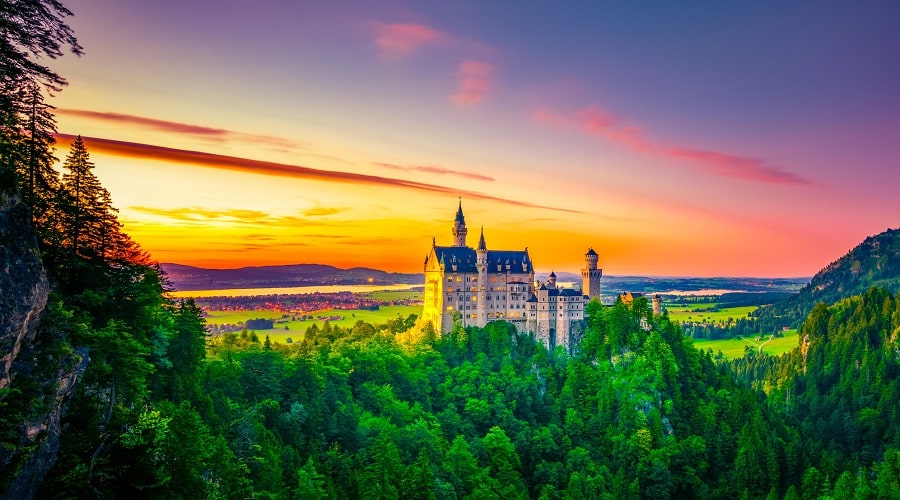
Today Neuschwanstein castle is one of Germany’s most prominent landmarks. It is located in Bavaria and brings incredible revenue to this German land. The castle is hugely popular due to the fact that it is a true wonder of German architectural creation. However, it had a hand in the fact that the king who created it ended his life in a very tragic way in the past.
The Limit of Ludwig II’s Dreams
Neuschwanstein was supposed to be the ideal castle in which the Bavarian king would live. Of course, it was not intended to be a major tourist attraction that would bring in huge profits to Bavaria. It was to be a place where the monarch could find refuge and relax in the charming gardens, or play the games of chance for which he was a passionate gambler. It was with such thoughts that Ludwig II, who was hailed as a madman, began the construction of his citadel.
Something went wrong
From the earliest days of construction, Neuschwanstein brought nothing but trouble for its creator. As the castle was being built on a mountain, it was necessary to procure special equipment capable of transporting the stone blocks to the top. It was necessary to ensure very good safety for the workers, because the height at which they were working was not too high. Neuschwanstein grew by leaps and bounds, but also consumed large sums of money, which eventually depleted the royal treasury. Ludwig II started borrowing money from foreign countries, but he had no money to give – he spent it on construction and cashed out on gambling. The king was on the verge of ruin and in despair.
A sad ending
Neuschwanstein was never completed, as work was halted for lack of funds. Ludwig II’s dream of creating a majestic castle from which to rule his land was finally shattered. He was also deprived of the throne because of his questionable behaviour (spending huge sums of money on the castle). The result was the king’s suicide at Lake Starnberger See. The Bavarians, who were very fond of their ruler, erected a cross at the site of his death, which still stands to this day.
Neuschwanstein today
Although construction work largely came to a halt following the death of Ludwig II in 1886, Neuschwanstein Castle was preserved. Certain parts of the building, including the Bower and the Square Tower, were completed in a simplified form by 1892. The castle opened its doors to the public on 1 August 1886 and gradually became one of Bavaria’s most famous tourist attractions. Today, around 1.4 million people visit this historic landmark each year, with more than 6,000 visitors a day taking guided tours of its rooms during the summer months. Tourism revenue makes a significant contribution to the regional economy. At the same time, maintaining the castle requires substantial investment, as the Alpine climate, high visitor numbers and challenging geological conditions make regular restoration and structural maintenance essential. In July 2025, the completion of extensive renovation work was announced, with the Free State of Bavaria having invested approximately €43 million in the entire castle complex.
Conclusion
Neuschwanstein Castle draws a lot of attention not only for its beauty but also for its tragic past. It went down in history inextricably linked to its creator, King Ludwig II, who did everything he could to make his creation great. Today, Neuschwanstein is the most outstanding castle created by a German hand.