Bremerhaven Prepares for Its 200th Anniversary in 2027: Maritime Heritage, Museums and Over 200 Events
Bremerhaven will celebrate its 200th birthday in 2027 with a year-long programme reflecting the German port city’s close relationship with the sea. The anniversary falls on 11 January, two centuries after the agreement that led to its foundation. By autumn 2026, organisers anticipated more than 200 events and projects, including sailing celebrations, exhibitions, concerts and guided visits. For travellers, the bicentenary offers a chance to understand how a harbour built for Bremen became a centre of emigration, fishing, shipbuilding and marine research.
From a New Harbour in 1827 to a City Shaped by the Sea
Bremerhaven began with a practical problem. Silting on the River Weser made it increasingly difficult for large ships to reach Bremen, while overseas trade demanded better access. On 11 January 1827, Bremen’s mayor Johann Smidt signed an agreement with the Kingdom of Hanover to acquire land near the mouth of the River Geeste. Construction of the Old Harbour began that summer under Dutch engineer Johannes Jacobus van Ronzelen. The harbour opened in 1830, and the settlement grew around it. The 2027 anniversary therefore marks the founding agreement, rather than the opening of the first dock.
During the nineteenth century, expanding harbour facilities brought transatlantic passenger ships and international commerce. North German Lloyd, established in Bremen in 1857, operated services to New York from Bremerhaven. Between 1830 and 1974, approximately 7.2 million emigrants departed from the port for destinations overseas. Families assembled on the quayside before embarking on journeys that often changed their lives permanently. Their stories remain central to Bremerhaven’s identity and explain why the city’s museums and anniversary programme focus on people as well as ships.
The present city also includes communities with much older histories. Lehe was recorded as early as 1273, while neighbouring Geestemünde developed its own harbour, shipyards and fishing trade. These districts were brought together through political changes, and the enlarged city regained the name Bremerhaven in 1947 after wartime destruction. Today, the local economy combines cargo handling, ship repair, fisheries, research and tourism. The bicentenary is therefore also about the neighbourhoods and workers who shaped the city beyond its original waterfront.
Where Visitors Can Still See the Working Port
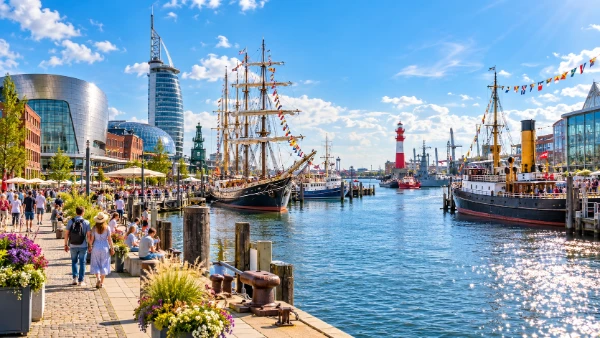
The Old Harbour and neighbouring New Harbour offer an accessible introduction to the maritime city. In Havenwelten, preserved ships stand close to modern museums and waterside promenades. Some historic quay walls survive, although the waterfront has changed considerably since the nineteenth century. Walking between the basins reveals the contrast between Bremerhaven’s earliest docks and the much larger shipping operations farther north. It is also an opportunity to watch the everyday movements of vessels on the Weser.
The German Maritime Museum’s harbour includes the whaler RAU IX, harbour tug STIER and deep-sea salvage tug SEEFALKE, with visits aboard subject to opening arrangements. At the fishing harbour, the preserved side trawler FMS GERA illustrates the demanding routines of deep-sea fishing. Their machinery, specialist equipment and compact working spaces tell a more direct story than photographs alone. Visitors interested in current shipping operations can consider an organised harbour tour, rather than attempting to enter restricted commercial areas.
Bremerhaven is still a working international port, where container cranes, shipyards and cruise facilities form part of the daily landscape. Guided harbour bus tours can provide views unavailable from public walking routes, although routes depend on operational and security conditions. This is a useful complement to the museum ships: seeing both helps explain how the city’s maritime industries have changed. Check tour availability before arriving, particularly during the busier summer months of the anniversary year.
Museums That Explain Two Centuries of Maritime History
The German Maritime Museum, or Deutsches Schifffahrtsmuseum, is a natural starting point. Its best-known exhibit is the Bremen cog, a medieval merchant vessel dating from around 1380 and discovered in the Weser in 1962. The preserved wreck reveals how trade worked centuries before Bremerhaven existed. Other galleries examine shipbuilding and people’s relationship with the ocean. Special exhibitions scheduled into 2027 address subjects including animals aboard ships and seafarers’ experiences during the pandemic. Visitors should check which displays are open on their chosen dates.
The German Emigration Center, known as Deutsches Auswandererhaus, tells port history through individual lives. Beside the New Harbour, reconstructed interiors, family records and personal accounts show what departure and arrival meant for migrants. The collection includes tens of thousands of personal objects and hundreds of eyewitness interviews. Its location is especially meaningful: this waterfront once witnessed departures that separated families across continents. The museum also covers immigration to Germany, giving the subject a broader perspective than the historic passenger routes alone.
For the everyday history of the city, the Historisches Museum Bremerhaven stands beside the River Geeste. Its collections connect trade, fishing, local industries and domestic life with the development of different districts. Here, visitors can understand the workforce behind the harbours and the political changes that shaped Bremerhaven. The museum’s location also relates closely to anniversary plans for a theatrical retelling of the city’s foundation nearby. It adds a valuable local perspective to the larger waterfront attractions.
Climate, Fishing Traditions and Museums Beyond the Docks
Bremerhaven’s scientific identity is visible at the Klimahaus in Havenwelten. Its main exhibition follows longitude 8°34′ east across different climate regions, using recreated environments, temperatures and humidity to show how people live around the world. The newer permanent exhibition Weather Extremes examines severe weather and its consequences. Both subjects connect naturally with a coastal city and its research community. Families should set aside several hours for a visit, rather than treating the Klimahaus as a short stop.
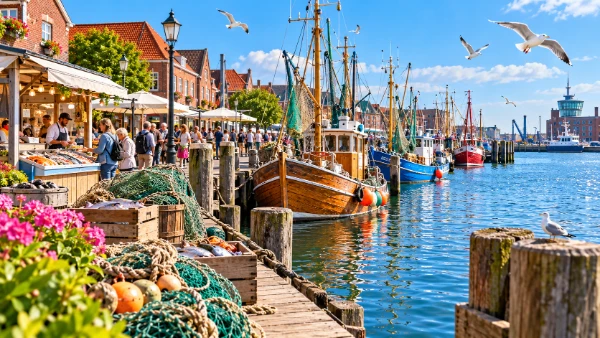
South of the central waterfront, Schaufenster Fischereihafen keeps another aspect of Bremerhaven’s history alive. Historic packing halls now stand alongside seafood businesses, restaurants and attractions about fishing. Fischbahnhof 360° uses large-scale projections to explain the industry and the North Sea environment, while FMS GERA shows the reality of work aboard a trawler. The district is particularly rewarding for visitors who want to connect the city’s maritime story with its food traditions and everyday working life.
Marine research gives the anniversary a forward-looking dimension. The Alfred Wegener Institute, based in Bremerhaven, studies polar regions and the oceans. For 2027, the German Emigration Center and Klimahaus are preparing a joint exhibition about migration and climate protection, according to the anniversary organisers. Its final dates and details were not confirmed in the September 2026 announcement. These subjects show why Bremerhaven’s relationship with the sea is not limited to history: it also involves questions about environmental change and the future.
More Than 200 Events Planned for Bremerhaven’s 2027 Jubilee
Celebrations formally begin on 11 January 2027 with a state ceremony at the Stadttheater, marking 200 years since the founding agreement. The programme will extend across the year rather than one festive weekend. On 30 September 2026, Erlebnis Bremerhaven announced more than 200 expected events, activities and projects. Of these, 123 had been selected for funding totalling €1.4 million from the State of Bremen, following more than 400 applications. The total is a developing programme, not a guarantee that every proposed activity has a confirmed date.
Several dates offer useful starting points for a trip. A public celebration is scheduled for Konrad-Adenauer-Platz on 1 May, while Lütte Sail, the principal maritime highlight, is planned for 11–15 August 2027. Maritime institutions intend to contribute activities, and the training ship Schulschiff Deutschland will mark its own centenary that year. Organisers have cautioned that construction around the quays may affect the sailing event’s arrangements. Travellers hoping to board particular ships should check confirmed visitor access and ticket information closer to the time.
The programme extends beyond the waterfront. Plans include historic peat boats on the Geeste in early May, a summer music gathering in Bürgerpark, a stage revue linking Bremerhaven with New York and a proposed Rock im Dock 2.0 festival at Lloyd Werft. In autumn, Brücke nach Übersee is intended to portray the city’s foundation through theatre, music and light beside the Geeste. Photography exhibitions, neighbourhood celebrations and visits to businesses will add further variety. These projects were announced in 2026 and remain subject to organisers’ final schedules.
How to Plan a Visit During the Anniversary Year
May and August are likely to offer particularly lively visits, while quieter periods may suit travellers focused on museums. The official anniversary calendar at bhv-200.de began publishing events in October 2026 and is designed to receive further updates. Check it before booking and again shortly before departure, since the dates, costs and accessibility of individual events may change. Not every anniversary activity requires a ticket, but visitors should not assume that all celebrations or museum entries are free.
Bremerhaven can be reached by rail through Bremen and by road via the A27. Many major attractions are close together in Havenwelten, allowing visitors to walk between the German Maritime Museum, German Emigration Center and Klimahaus. The Historical Museum and Schaufenster Fischereihafen can be added using local transport. Two days make a sensible first visit: one for the main waterfront museums, another for the fishing harbour, a port tour and a jubilee event. Allow extra time when large gatherings are expected.
Leave some flexibility in the itinerary. North Sea weather can change quickly, open-air events may be affected by wind or rain, and access to ships depends on safety arrangements. Book accommodation well ahead of the August sailing dates and check each museum’s own opening calendar. The 2027 birthday will be a reason to visit, but the lasting interest lies in Bremerhaven itself: a historic point of departure, a working port and a city whose residents continue to shape its maritime identity.