Saale-Unstrut in Spring: Naumburg, Freyburg and a Car-Free Wine Route
Saale-Unstrut is one of Germany’s lesser-known wine regions, yet in spring it offers a clear advantage: compact distances, reliable rail connections and a landscape that shifts from bare vineyards to fresh green within weeks. Travelling without a car here is not a compromise but a practical way to move between Naumburg, Freyburg and the surrounding hills. This guide focuses on a realistic one- to two-day route with concrete logistics, timing and local context, based on current conditions in 2026.
Getting to Saale-Unstrut and Moving Around Without a Car
Naumburg (Saale) is the most convenient entry point. Direct regional trains connect it with Leipzig and Halle, both of which are served by long-distance services. From Leipzig Hauptbahnhof, the journey takes around one hour, with departures at least once per hour. Tickets fall under regional transport tariffs, and a day pass (such as Sachsen-Anhalt-Ticket) can cover multiple journeys in one day, making short hops between towns cost-effective.
Within the region, the Unstrutbahn line is the backbone of car-free travel. It links Naumburg to Freyburg and continues towards Nebra. Trains are small but frequent enough for day planning, typically running every one to two hours. Platforms are close to town centres, so there is no need for additional transfers. In spring, this line becomes especially useful as it follows the river valley, offering direct access to vineyards and walking paths.
Local buses fill the remaining gaps, though they run less frequently. For short distances, walking is often faster and more reliable. Between Naumburg and Freyburg, for example, the distance is about 9 kilometres along the river, which can be covered on foot or by bicycle. Rental bikes are available at stations and in town centres, and cycling infrastructure is well maintained along the Saale and Unstrut rivers.
Best Travel Timing and Practical Tips for Spring 2026
Spring in Saale-Unstrut typically starts in late March and peaks in April and May. Vineyards begin to turn green, fruit trees blossom and temperatures stabilise between 10 and 18°C. Weekdays offer quieter trains and less crowded tasting rooms, while weekends bring more visitors, especially from Leipzig and Berlin.
Train schedules remain consistent year-round, but it is worth checking for minor timetable updates in 2026, particularly on regional lines where engineering works can occur. Deutsche Bahn’s app provides real-time updates, which is useful when planning tight connections between Naumburg and Freyburg.
Accommodation is limited in smaller towns, so booking ahead is advisable if staying overnight. Naumburg has a wider range of hotels and guesthouses, while Freyburg offers smaller wine-focused stays. Many wineries open from late March onwards, but exact opening hours vary, so confirming in advance avoids unnecessary detours.
Naumburg: Cultural Base and Starting Point
Naumburg is not just a transport hub but a cultural anchor of the region. The Naumburg Cathedral, a UNESCO World Heritage Site, is known for its medieval sculptures, including the well-preserved figure of Uta. Visiting the cathedral early in the day helps avoid tour groups and allows more time to explore the old town.
The town centre is compact and walkable, with cobbled streets, small squares and traditional houses. Cafés and bakeries open early, making it a convenient place to start the day before heading into the vineyards. For those interested in regional food, menus often include local cheeses, sausages and seasonal dishes that reflect Saxony-Anhalt traditions.
From a logistical perspective, Naumburg is the best place to base yourself. It provides access to trains, bike rentals and essential services. Even if the main goal is wine tasting in Freyburg, starting in Naumburg allows for a more structured and flexible itinerary.
Short Routes from Naumburg to the Vineyards
The most direct route to Freyburg is by train, taking around 10 minutes. However, the walking path along the Saale river is often preferred in spring. The route is flat, clearly marked and passes through vineyards, small viewpoints and quiet rural sections.
Cycling is another practical option. The Saale cycle path is well signposted and suitable for casual riders. Bike rental shops near the station provide daily rates, and most routes do not require advanced planning or special equipment.
For those with limited time, a half-day trip from Naumburg to Freyburg and back is entirely feasible. Trains allow for flexible return times, which means plans can adapt depending on weather or the pace of the visit.
Freyburg and the Wine Route: What to See and Taste
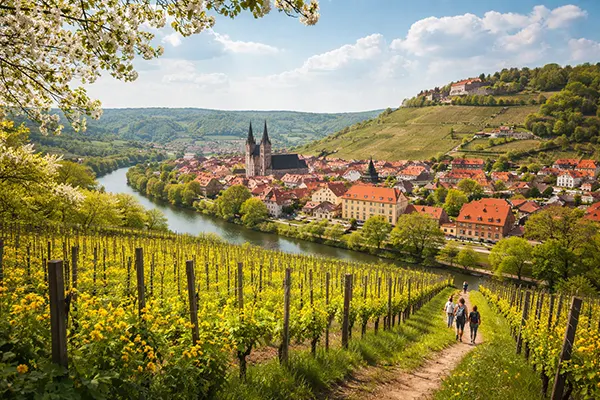
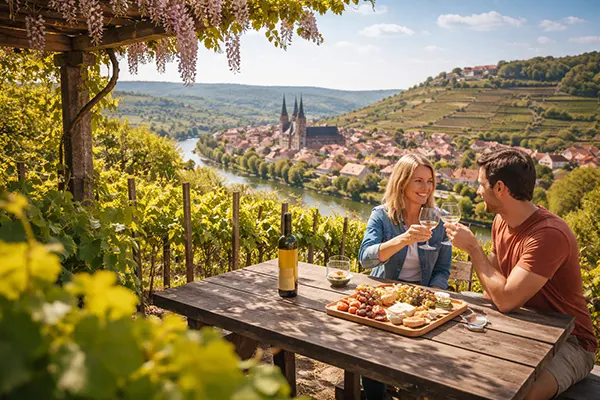
Freyburg is the centre of the Saale-Unstrut wine region. The town is small but structured around wine culture, with several wineries, tasting rooms and vineyard paths within walking distance. The Rotkäppchen sparkling wine cellars are one of the main attractions, offering guided tours that explain production methods and regional history.
Beyond the larger producers, smaller family-run wineries provide a more direct experience. Many focus on white varieties such as Müller-Thurgau, Silvaner and Riesling, adapted to the cooler climate of eastern Germany. Tastings are usually informal, and staff are willing to explain differences between local styles.
The surrounding landscape is defined by terraced vineyards, which are best explored on foot. Marked trails lead to viewpoints above the Unstrut valley, offering a clear sense of the region’s scale. Spring conditions make these walks particularly accessible, as temperatures are moderate and vegetation is just beginning to grow.
Planning a One- or Two-Day Car-Free Wine Route
A one-day itinerary typically includes morning travel to Naumburg, a short visit to the cathedral, followed by a train or walk to Freyburg. Afternoon can be spent visiting one or two wineries, with a return in the evening. This structure avoids rushing while still covering key locations.
For a two-day trip, staying overnight in Freyburg allows more time for vineyard walks and additional tastings. The second day can include a short train ride towards Nebra or nearby villages, where the landscape becomes quieter and less visited.
Food options are straightforward but satisfying. Local restaurants focus on seasonal ingredients, often paired with regional wines. Reservations are recommended on weekends, especially during spring when visitor numbers increase. This approach ensures a smooth, practical journey aligned with current travel conditions in 2026.