Thuringia in 48 Hours: Weimar + Jena + Wartburg Castle (Eisenach) in One Route
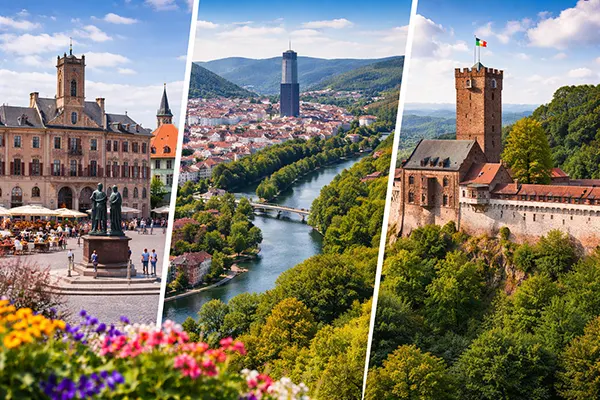
This two-day route is built for people who want “Germany beyond the capitals” but still expect heavyweight culture: Weimar’s classicism and Bauhaus, Jena’s university town energy and Saale valley views, and Eisenach’s Wartburg as the historic finale. The plan keeps museum time realistic, uses walkable neighbourhood loops, and leaves breathing space for coffee, photos, and the occasional closed door. All timings assume a normal walking pace and short queues; if you travel in peak summer or during major events, add a buffer.
Day 1 (Morning–Early Afternoon): Weimar classics without rushing
08:30–09:15: Start with breakfast close to Weimar Hauptbahnhof or in the centre so you can step straight into the old town. 09:15–11:30: Choose one “anchor museum” rather than trying to stack three back-to-back. If you want literature and interiors, prioritise Goethe’s residence and museum-style rooms; if you prefer design and 20th-century history, go for the Bauhaus Museum and give it the full slot. 11:30–12:15: Short reset walk through the historic centre—think market square vibes and street-level architecture spotting instead of ticking landmarks.
12:15–13:15: Lunch in the centre (sit-down, not grab-and-go). This matters because Weimar’s museums can be mentally dense, and a proper break makes the afternoon smoother. 13:15–14:45: Pick one compact “second layer” stop: either a smaller museum visit, a short park loop, or a calm hour in a library-like space if the weather is bad. Try to avoid switching themes too often; Weimar rewards focus.
14:45–15:15: Make your way back towards the station area (or wherever you plan to catch the train) with a practical aim: snacks for the ride, a water refill, and a quick check of your next museum’s open day. You’re about to change city tempo, so a clean handover helps—especially if you’re travelling with someone who needs a short pause between “culture blocks”.
Weimar museum strategy: how to mix interiors, streets, and calm time
Build your Weimar morning like a sandwich: one major museum block, then outside time, then a smaller indoor stop. The museum-first approach works because you arrive fresh, and it reduces the temptation to keep “just one more gallery” when your train time approaches. If you are choosing between Goethe-related houses and broader exhibitions, decide based on what you actually enjoy—period rooms and manuscripts versus curated theme rooms and modern display design.
Be realistic about museum fatigue. Even if a museum looks small on a map, reading labels in German/English, absorbing portraits, and navigating rooms takes time. If you feel yourself speeding up, that’s usually a sign to step outside for 15 minutes and come back, rather than pushing through. In Weimar, the streets and small squares are part of the experience, not just corridors between ticket desks.
Keep a “flex hour” in your head. If everything runs perfectly, it becomes coffee and a calm walk. If something is unexpectedly closed, it becomes your replacement slot without stress. This is the single easiest way to make the day feel like travel rather than a checklist.
Day 1 (Late Afternoon–Evening): Jena for viewpoints, old town loops, and a lighter museum load
15:30–16:00: Train from Weimar to Jena (the ride is short, so try to have your plan ready before boarding). Arrive and do a quick orientation: where the old town begins, where the river is, and where you’ll eat later. 16:00–17:30: Old town loop at street level—prioritise the feel of the place: compact streets, university atmosphere, and a few photo stops rather than chasing every church door.
17:30–18:30: Choose one “Jena signature” experience. For many visitors this means a viewpoint over the Saale valley; for others it’s a small museum visit connected to the city’s science/optics reputation. Keep it intentionally lighter than Weimar. The point of Jena in this route is contrast: less formal, more lived-in, and good for sunset pacing.
18:30–20:30: Dinner and a slow evening walk. If the weather is kind, finish by the water or in a quiet square with a final drink. Aim to be heading back to your accommodation (in Jena or Weimar, depending on your booking) by 21:00–21:30 so Day 2 doesn’t start with exhaustion.
Jena pacing tips: how to fit a panorama without turning it into a hike
If you want a viewpoint, treat it as an event with a time cap, not a “sometime later” idea. Pick a target slot (for example 17:30–18:30), go up, take your photos, and come down. Viewpoints are easy to stretch into two hours, and then dinner becomes late, which makes the day feel longer than it is.
Keep museum expectations modest in Jena on Day 1. After Weimar, many people underestimate how quickly attention fades. A single focused visit—science/optics, a local collection, or a compact exhibition—is more satisfying than bouncing between small rooms while thinking about train times.
Use the city’s compactness as your advantage. Jena works well with “mini loops”: 20–25 minutes of walking, then a short stop, then another loop. It keeps the day dynamic while still feeling relaxed.
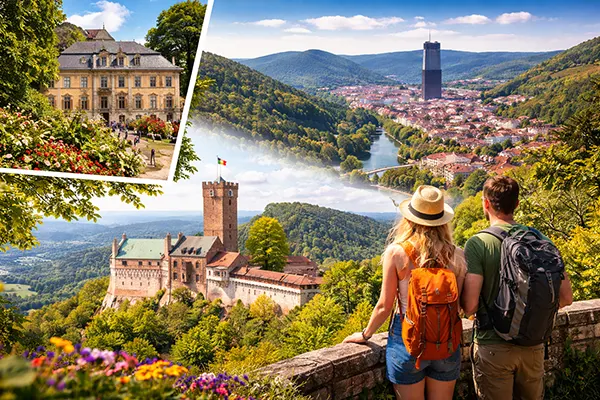
Day 2: Eisenach and Wartburg Castle as the cultural finale
08:30–09:45: Travel to Eisenach by train in the morning so you reach the castle area while energy is high. 10:00–12:30: Wartburg visit as your main block—this is where guided tours and timed entry (when offered) can shape your day, so build around the tour slot first, then fill the gaps with the grounds and viewpoints.
12:30–13:30: Lunch in Eisenach (or a simple meal near the castle area if that suits your timing). 13:30–15:00: Eisenach town time: a slow old-town walk, a short museum stop if you still have appetite for interiors, or simply a café and a book. Don’t underestimate the value of “town texture” after a landmark-heavy morning.
15:00–17:00: Optional second look at Wartburg surroundings (if you rushed the viewpoints earlier) or a calm close in Eisenach before your return train. If you’re heading onwards to another city, treat 17:00 as your cut-off for new activities. The goal is to finish the route feeling satisfied, not depleted.
Wartburg logistics: tickets, seasonal hours, and what to prioritise on-site
Wartburg is open throughout the year, but the practical rhythm on the day depends on seasonal ticket office and facility hours. Plan to arrive early enough that you are not racing the last tour slot, and keep an eye on winter/shoulder-season timings where parts of the visitor set-up may run shorter. This is one of those places where a 30-minute delay can cascade into a squeezed tour plus a hurried walk back down.
Prioritise in this order: the guided or structured interior experience (if you want it), then the key viewpoints, then the extra rooms/exhibitions if time remains. Many people do it backwards and end up missing the interior highlight because they spent too long on “one more photo angle”. A firm plan makes the castle feel richer, not stricter.
Finally, leave space for the unplanned moments: a quiet bench, a view you didn’t expect, a conversation with a guide, or simply taking in how the castle sits above the landscape. That’s the part you remember months later—and it’s exactly why this route works as “city–city–castle” instead of three unrelated day trips.